
Introduction to Real Estate vs Stocks
You’re probably wrestling with a classic dilemma: real estate vs stocks. One promises steady cash flow and a tangible asset; the other offers liquidity and the power of compounding. Both look good on paper, but picking the right path can feel like standing at a crossroads with no signposts.
Take Jane, for example. She has $50,000 saved and is torn between buying a modest duplex that could net a 5% rental yield and putting the same money into an S&P 500 index fund that has historically returned about 7% per year. She worries about the time she’ll need to manage tenants, yet she also fears the market’s ups and downs. Her pain point is clear: how to choose an asset that matches her risk tolerance, time horizon, and lifestyle.
There’s no single answer that fits everyone. Real estate demands more capital upfront and hands-on effort, while stocks are easy to buy and sell but can swing wildly. The good news is you don’t have to pick just one. A diversified approach lets you blend the stability of property with the growth potential of equities. By spreading money across both, you smooth out volatility and capture the strengths of each class.
In the pages that follow we’ll break down the pros and cons of real estate vs stocks, compare cash flow, tax benefits, and effort required, and show how a balanced mix can protect you from the worst-case scenarios. Think of it as building a safety net that still lets you reach for higher returns, without forcing you to gamble on a single asset.

Key Differences Between Real Estate and Stocks
When you compare real estate vs stocks, you’re looking at two very different ways to grow money. One is a brick-and-mortar asset that can generate rent; the other is a share of a company that can appreciate and pay dividends. The choice changes how you handle cash, risk, and time.
Liquidity is the first line in that comparison. You can sell a stock in seconds and pay a tiny commission. Selling a house usually takes weeks or months, and you’ll pay agent fees, title costs, and sometimes repair expenses. Returns also diverge. Over the last two decades the S&P 500 has delivered about 7–8 % annualized returns, while U.S. residential real estate has offered roughly 3–5 % in rental yield plus 3–5 % in price appreciation, depending on the market.
Liquidity, Transaction Costs, and Returns
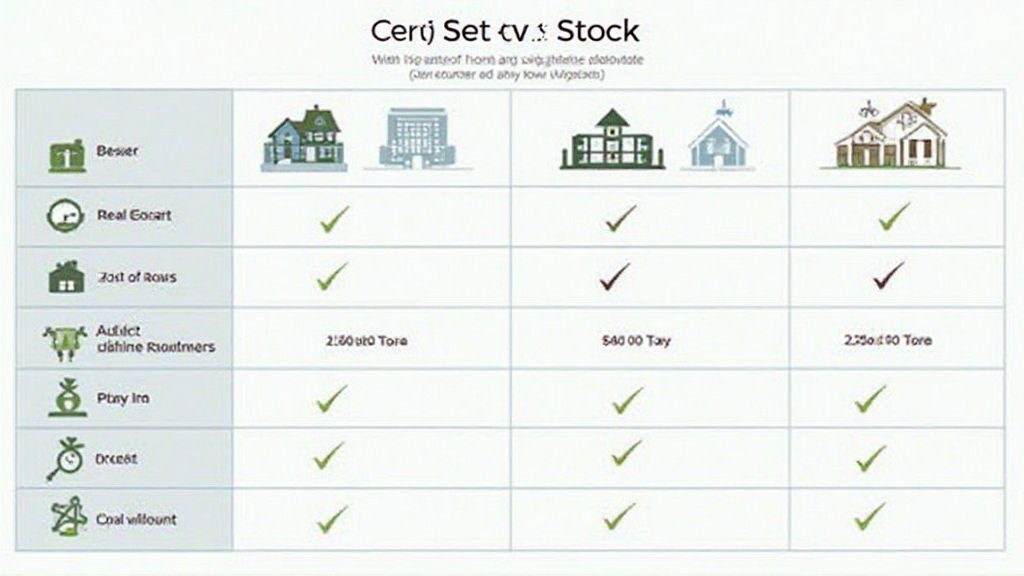
| Aspect | Real Estate | Stocks |
|---|---|---|
| Liquidity | Low – months to close, high closing costs | High – instant trades, low brokerage fees |
| Transaction Costs | 5–7 % of sale price (agent commissions, legal fees) | 0.1–0.5 % per trade (brokerage commission) |
| Typical Returns | 3–5 % rental income + 3–5 % appreciation (varies by location) | 7–8 % annualized (historical S&P 500 average) |
| Effort Required | High – property management, maintenance, tenant screening | Low – passive for index funds, occasional portfolio rebalancing |
| Risk Factors | Vacancy, property damage, local market slowdown | Market volatility, company performance, sector concentration |
Concrete example: Imagine you have $200,000. Buying a duplex in a mid-size city could net $10,000 a year in rent (5 % yield) but you’ll also spend $12,000 on taxes, insurance, and upkeep. Placing the same $200,000 in an S&P 500 index fund could earn about $14,000 in a typical year, with virtually no day-to-day management.
If you’re new to investing and want to grasp basics like diversification and compounding, start with this beginner’s guide: Investing for Beginners – India. Understanding the real estate vs stocks trade-off helps you match your money to your goals, risk appetite, and lifestyle.
Portfolio Diversification Strategies
When you weigh real estate vs stocks, the smartest move is rarely to choose one outright. Mixing the two creates a buffer against market swings and lets you earn both rental cash flow and equity growth. A balanced blend can smooth returns and protect your capital.
Start by deciding how much of your net worth you’re comfortable allocating to each class. A common rule of thumb is to tilt toward stocks for growth and use real estate for stability. The exact split depends on age, income, and risk tolerance.
Optimal Asset Allocation
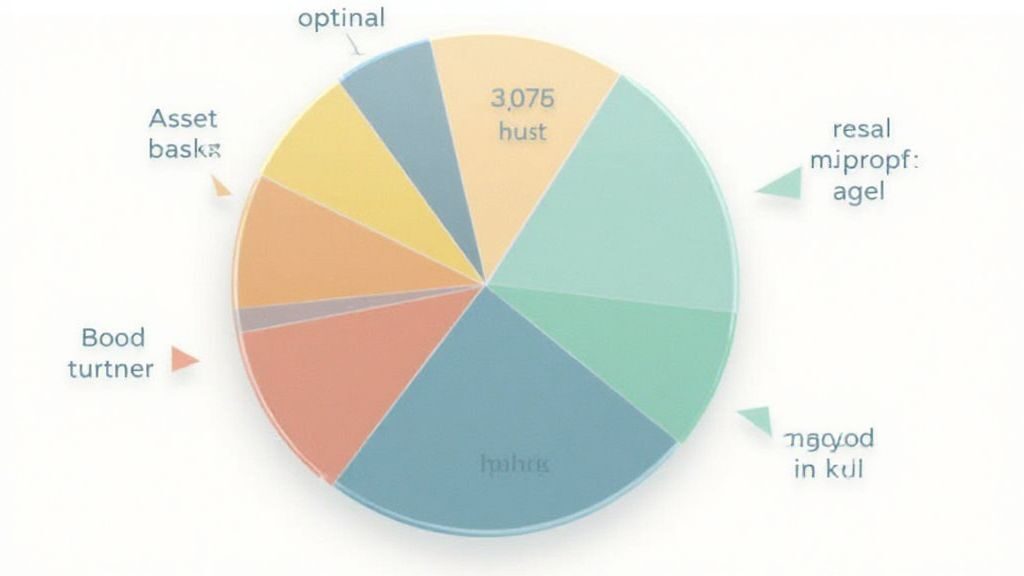
| Allocation | Risk | Typical Return | How to Build It |
|---|---|---|---|
| 60 % Stocks, 40 % Real Estate | Moderate | 6–8 % p.a. | $300k in index funds + $200k in a rental duplex |
| 80 % Stocks, 20 % Real Estate | Higher | 7–9 % p.a. | $400k in S&P 500 ETF + $100k in a REIT |
| 50 % Stocks, 50 % Real Estate | Lower | 5–7 % p.a. | $250k in diversified stocks + $250k in a property fund |
Actionable steps
- Assess your cash – Determine how much you can invest without hurting daily expenses.
- Pick a starter vehicle – Use a low-cost REIT or a real-estate crowdfunding platform for the property side; choose a broad index fund for stocks.
- Set a target mix – For a beginner, 70 % stocks / 30 % real estate works well.
- Invest incrementally – Put money in monthly or quarterly installments to smooth price volatility.
- Rebalance annually – If stocks surge, shift some gains into real estate to keep the ratio steady.
Common objection: “I can’t afford a down-payment on a house.”
Response: Begin with a REIT or a $5,000 real-estate crowdfunding slot. It gives exposure to property cash flow without the mortgage burden. As your portfolio grows, you can add a physical property later.
Need more tips on blending assets and managing cash flow? Check out the guide on Personal Finance Tips. By treating real estate vs stocks as complementary pieces, you build a resilient portfolio that works for you, not the other way around.
Conclusion and Recommendations
The real estate vs stocks debate isn’t a zero-sum game. Real estate gives you steady rent, tax breaks, and a physical asset, but it ties up cash and needs active management. Stocks provide liquidity, compounding growth, and low entry costs, yet they swing with market sentiment. The sweet spot is a mix that reflects your risk tolerance, time horizon, and lifestyle.
Take Maya, a 30-year-old with $250,000 to invest. She allocates $150,000 to a low-cost S&P 500 ETF (average 7 % annual return) and $100,000 to a REIT that yields 5 % plus modest appreciation. After ten years, the stock slice grows to about $295,000, while the REIT portion reaches roughly $165,000 (including dividends). Combined, Maya’s portfolio nears $460,000—almost double her starting capital—while she enjoys both growth and cash flow.
What to Do Next
- Run the numbers. Use an online investment calculator to model different allocation scenarios.
- Pick a starter mix. A 70 % stocks / 30 % real-estate split works well for many early-career investors.
- Rebalance yearly. Shift gains from the stronger asset back into the weaker one to keep your target ratio.
Ready for a deeper dive? Explore our step-by-step checklist and tools in the Personal Finance India Guide. It walks you through setting goals, choosing vehicles (REITs, index funds, or direct property), and tracking progress.
Remember, the goal isn’t to pick a single champion but to build a resilient portfolio that earns you rent, dividends, and capital gains. Start small, stay consistent, and let the blend of real estate vs stocks work for you.