Personal finance tips are more than just guidelines; they’re your roadmap to financial stability and growth. Whether you’re looking to build savings, tackle debt, or simply manage your monthly expenses, knowing where to start is often the hardest part.
What are the essential personal finance tips?
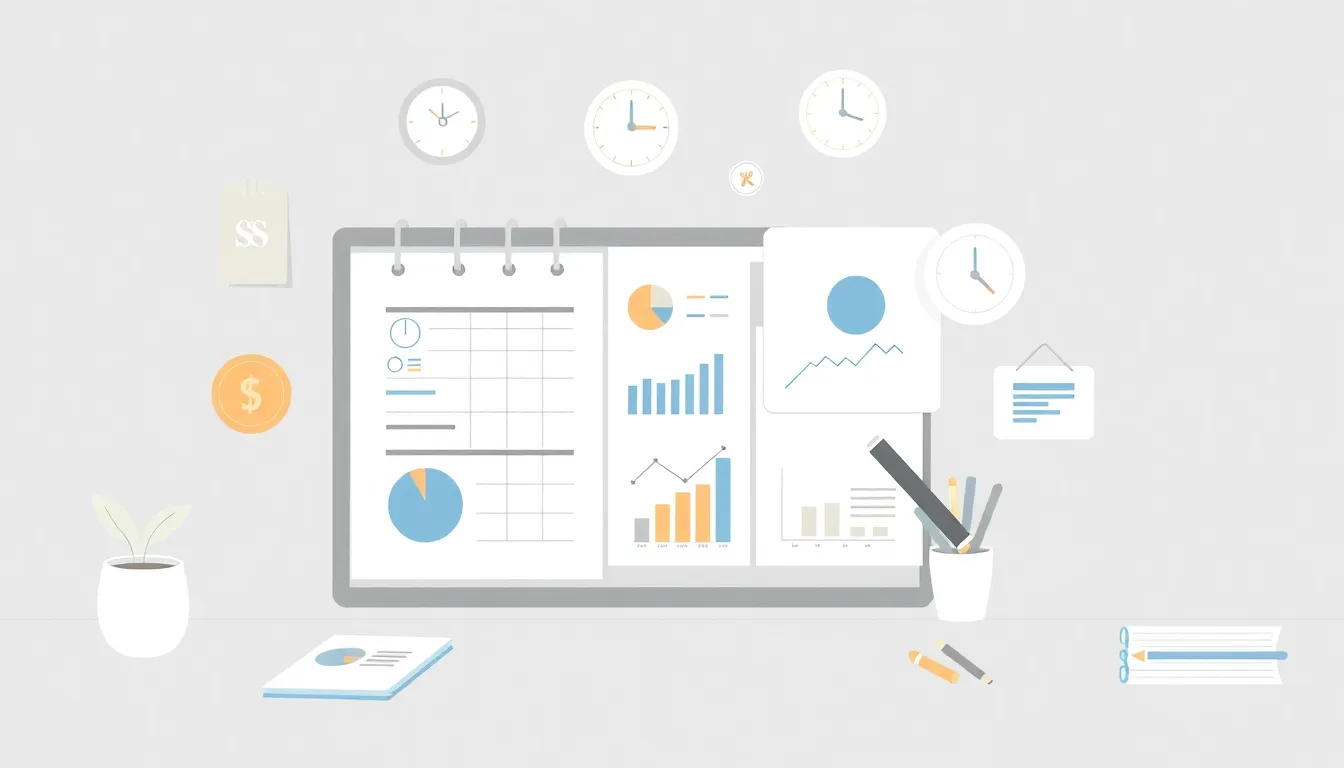
Navigating your finances can feel overwhelming. With everyday expenses, unexpected bills, and the constant pressure to save for the future, many people struggle to keep their heads above water. This blog aims to provide you with essential personal finance tips that cover everything from structured budgeting techniques to effective debt payoff strategies. One effective approach is using comprehensive financial to-do lists and monthly calendars to track your progress, ensuring you stay accountable. If you’re looking for tools that can aid your investing efforts, be sure to check out our recommendations on the best AI investing tools.
In addition to budgeting, understanding key elements like emergency funds, retirement savings benchmarks, and tax strategies can significantly enhance your financial health. Resources like Morningstar offer insights on crafting your financial to-do list to stay organized and focused as you work toward your goals; you can view their comprehensive guide here.
How can understanding personal finance improve my life?
Knowledge isn’t just power; in finance, it can lead to lasting success. Gaining a better understanding of personal finance helps you make informed decisions, ensures you are adequately prepared for emergencies, and enables you to set realistic financial goals. If you’re eager to dive deeper, Schwab provides a valuable resource for organizing your financial time management through their personal finance calendar.
As we explore practical personal finance tips and strategies, you’ll find that by demystifying your financial situation, you will feel empowered to take control and make your money work for you. Let’s get started!
What are effective budgeting strategies for personal finance?
Personal finance tips that actually stick start with a budget you can see yourself using next month—not next decade. Pick the wrong method and the plan dies in three weeks; pick the right one and you free up $300–$600 a year without feeling pinched. Below are four battle-tested styles, plus the single “2026 money move” Fidelity says every first-time budgeter should lock in before spring.
1. 50-30-20 Rule
Needs 50 %, wants 30 %, savings 20 %. Fast to set up, but renters in high-cost cities often blow the 50 % cap on rent alone.
2. Zero-Based Budget
Every dollar gets a job. Great for detail lovers; torture for the rest of us.
3. Cash-Stuffing (a.k.a. Envelopes)
Physical cash in labeled envelopes. Works because when the envelope is empty, spending stops. Gen-Z TikTokers report cutting impulse buys by 38 % in the first month.
4. Two-Account Plan
Income hits Account #1; bills auto-deduct from Account #2 which holds only the exact bill total plus a $100 cushion. Anything left in Account #1 is “safe to spend.” No spreadsheets required.
Not sure which to choose? Run each for one pay-cycle and keep the winner. For a deeper dive on next-year tweaks—like raising 401(k) contributions two percentage points—see Fidelity’s 2026 money-moves checklist.
How to create a monthly budget?
Skip the glossy templates. Grab last month’s bank statement and a timer set for 25 minutes.
Step 1: Circle every “fixed” cost
Rent, utilities, subscriptions, insurance. These rarely change.
Step 2: Average the “flappy” costs
Groceries, gas, DoorDash. Add three months and divide by three.
Step 3: Set one target
Save $500, pay off a $2,000 card, or fund a spring-break trip—whatever keeps you motivated.
Step 4: Assign every surplus dollar
If income is $3,200 and core bills are $2,400, that $800 leftover must land in savings, debt, or sinking funds before the month starts.
Step 5: Automate and insure
Schedule transfers on payday and double-check you’re not over-paying for insurance. Our quick guide to insurance types explained shows where healthy 22-year-olds can safely trim premiums.
Step 6: Review with a 60-second scan each Friday night-
Adjust categories before the weekend splurge.
Done is better than perfect; a “good-enough” budget you’ll actually update beats a flawless one you abandon.
How does cash flow impact your finances?
Income – expenses = cash flow. Keep that figure positive or every personal finance tip in the world won’t save you from late fees and 24 % APR credit cards.
Quick test:
If you paid every bill the day before payday, would the checking balance stay above $0? If not, cash flow is technically negative even if you never overdraft.
Three levers to flip the number green:
-
- Bill timing: Ask credit-card companies to move due dates to the 5th of the month when your emergency fund is fattest.
-
- Subtraction before addition: Cancel one $14.99 streaming service before picking up a $20 side-hustle. Same net effect, zero extra work.
-
- Quarterly sweep: Merchants Bank’s year-end planning guide shows how funneling an annual tax refund into January bills smooths out 3-month dry spells.
Positive cash flow isn’t about bigger income; it’s about keeping more of what you already make.
What are the benefits of debt management strategies?
Debt handled right is a tool; handled wrong it’s a leak. A $5,000 card at 21 % grows to $6,155 in one year if you pay only the minimum. Swap that to a 10 % personal loan and the same payoff schedule costs $5,550—$605 saved without paying extra per month.
Other upsides:
-
- Credit score jump: Dropping utilization from 80 % to 30 % can add 40–60 points in two statement cycles.
-
- Cash-flow breathing room: Every $100 of minimum you eliminate frees $100 next month for investing or emergencies.
-
- Future rate leverage: Borrowers with 740-plus scores snag 0 % intro-APR offers and 5.5 % auto loans instead of 11 %.
How does debt snowball work?
List balances smallest to largest. Pay minimums on all except the baby. Throw every spare dollar at that baby. When it’s gone, roll its payment into the next balance—hence “snowball.”
Real-life snapshot:
Jessica, Austin TX, 26
-
- Card A: $400 @ 22 %
-
- Card B: $1,800 @ 19 %
- Card C: $6,100 @ 17 %
She pays $150 toward Card A while making $65 minimums on B and C. Four months later Card A is toast. She now hits Card B with $215 ($150 + $65). Ten months after that, Card B is gone and she attacks Card C with $380 a month. Total payoff time: 22 months instead of 9 years, saving roughly $2,400 in interest—even though the method ignores interest rates.
Why it works: Quick wins fire up dopamine, so you keep the plan alive longer. For 2026 trends—like rising minimum-card-payment amounts—check Morgan Stanley’s new-year financial-resolutions report.
Pick the strategy you can stick to, automate the payment, and watch your disposable income breathe again.

Why Implementing Personal Finance Tips is Crucial for Success?
Mastering your personal finances isn’t just about having a budget; it’s a crucial step towards achieving financial stability and growth. By adopting actionable personal finance tips, you’re setting a solid foundation for future success. Start by tracking your spending—it can reveal spending patterns you might not notice otherwise. Next, prioritize building an emergency fund; aim for three to six months’ worth of expenses that can cover you during unexpected situations. Additionally, evaluate investments and explore opportunities like dividend investing to create multiple income streams. For more insights on investing strategies, check out our guide on dividend investing income.
Making these personal finance tips a part of your routine can empower you to make informed decisions about your finances. Embrace the notion that small changes in your financial habits can lead to significant outcomes.
FAQ for Personal Finance Tips
What are some beginner personal finance tips?
If you’re new to managing your finances, starting with budgeting is a fantastic first step. Creating a budget helps you track where your money goes each month, so you can allocate funds to essential expenses and savings. Alongside budgeting, focus on building your savings. Consider setting up an automatic transfer to a savings account each payday. This way, saving becomes a consistent habit and minimizes the temptation to spend that cash. For more great insights, you might check out four financial goals you can set for 2026.
How can I improve my credit score?
Improving your credit score is all about consistency and monitoring. Start by keeping an eye on your accounts and paying your bills on time. Late payments can significantly impact your score. Consider setting reminders or automatic payments for recurring bills. It also helps to regularly check your credit report for errors which can be disputed if found. A proactive approach will not only boost your score over time but also improve your overall financial health. Need some guidance? Check out this helpful video on credit scores.
How do I handle debt responsibly?
Managing debt can seem daunting, but breaking it down can help. If you have multiple debts, consider using the snowball method: pay off the smallest debts first for quick wins, which can motivate you to tackle larger amounts. Alternatively, the avalanche method focuses on highest-interest debts first, potentially saving you more in interest payments. Whichever method you choose, create a plan and stick to it.
What’s the importance of an emergency fund?
Having an emergency fund is your financial safety net. It protects you from unexpected events like job loss or medical emergencies, which could otherwise lead to financial distress. Aim to save at least three months’ worth of expenses. This gives you a cushion to rely on when life throws a curveball.
By integrating these personal finance tips into your life, you’ll better prepare to secure your financial future. Remember, the journey to financial literacy is a marathon, not a sprint. Embrace each step and watch as your financial confidence grows.